Businesses across Bangladesh are increasingly adopting Self-Service Kiosk Bangladesh solutions to automate customer service and improve operational efficiency. A modern self-service kiosk allows customers to place orders, make payments, register information, or access services without direct staff assistance.
Retail stores, restaurants, hospitals, banking service centers, and government service points are rapidly implementing kiosk technology to streamline customer interaction. The demand for Self-Service Kiosk Dhaka and Self-Service Kiosk Chattogram installations is growing as organizations look for smarter customer service solutions.
When businesses search for Self-Service Kiosk Price in Bangladesh, they usually compare screen size, payment module integration, hardware durability, and software capability. Selecting the right kiosk system can significantly improve service speed, queue management, and operational productivity.
A self-service kiosk is an interactive digital system that allows customers to perform tasks such as ordering, payment, registration, or information access without staff assistance. These kiosks are installed in public environments to automate repetitive service processes and improve customer experience.
A typical kiosk system includes a touchscreen display, embedded computer, kiosk software, payment system, printer, and scanner. The software interface guides users step-by-step, allowing them to complete transactions independently.
Different industries use Self-Service Kiosk Bangladesh systems in different ways depending on their operational needs. Hardware configuration and software capability may vary depending on the industry.
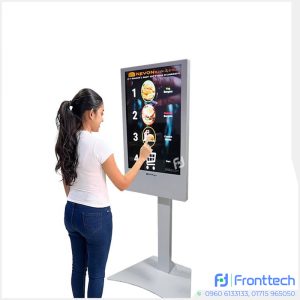
Retail stores and restaurant environments use touchscreen kiosks for ordering automation. For example, a
32 inch self service kiosk display allows customers to browse menus, select products, and complete payments.
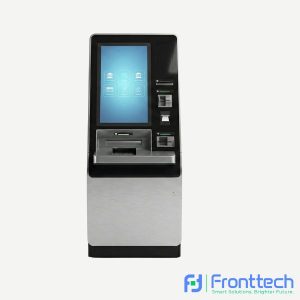
In the banking sector, secure transaction kiosks are essential. A
self service cash kiosk banking solution allows customers to make bill payments, deposits, and access financial services.
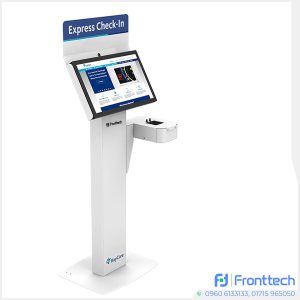
Healthcare institutions use
health kiosk systems for patient registration and check-in automation, reducing reception workload and improving service speed.
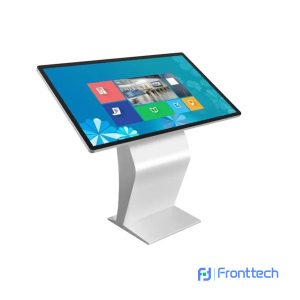
Retail businesses also use
digital signage kiosk display systems for interactive information display, promotional content, and shopping mall directories.
Organizations across multiple sectors are implementing Self-Service Kiosk Bangladesh systems to improve service efficiency and customer interaction. These kiosks help businesses automate repetitive processes while providing customers with a faster and more convenient experience.
Industries such as restaurants, retail stores, hospitals, banking services, and government offices benefit from kiosk automation. Businesses in major commercial cities are also investing in Self-Service Kiosk Dhaka and Self-Service Kiosk Chattogram systems to modernize their service infrastructure.
Restaurants and fast-food chains are one of the largest users of self-service kiosk systems. A restaurant ordering kiosk allows customers to browse menus, customize their meals, and place orders directly through a touchscreen interface. This system reduces waiting time, improves order accuracy, and helps restaurants manage high customer traffic during peak hours.
In addition, restaurant kiosks can integrate with POS systems and kitchen display systems so that orders are automatically sent to the kitchen. This automation improves operational efficiency and allows staff to focus more on food preparation and customer service.
Retail businesses use self-service kiosks to provide product information, promotional offers, and customer assistance within the store environment. Customers can search for products, check pricing, locate items in the store, or explore promotional campaigns through an interactive kiosk display.
Retail kiosks also support loyalty program registration, digital catalogs, and interactive advertisements. This technology enhances the shopping experience and helps businesses deliver more personalized marketing content.
Hospitals and healthcare facilities use self-service kiosks to automate patient registration and check-in processes. Patients can enter their personal information, verify appointments, and complete registration without waiting at the reception desk.
Healthcare kiosks help hospitals reduce administrative workload and improve patient flow management. They also minimize queues in busy healthcare environments and provide a faster and more organized check-in process.
Banks and financial institutions deploy self-service kiosks to provide automated financial services to customers. These kiosks allow customers to perform transactions such as bill payments, account inquiries, deposits, and other financial services without waiting for a service representative.
By using banking kiosks, financial institutions can reduce operational pressure on service counters while offering faster and more convenient services to customers.
Government offices and public service centers are also adopting kiosk technology to improve citizen service delivery. These kiosks allow people to submit documents, register for services, obtain public information, or complete digital applications without manual assistance.
Self-service kiosks help government organizations reduce administrative workload and improve service accessibility for the public.
When selecting a professional Self-Service Kiosk Bangladesh solution, businesses evaluate several hardware and software features to ensure reliability and long-term performance.
Modern kiosk systems are built with commercial-grade components designed for heavy public usage. These systems typically include industrial touchscreens, payment modules, printers, scanners, and remote monitoring capabilities.
A commercial self-service kiosk uses an industrial-grade touchscreen designed for continuous operation in public environments. These displays are built to withstand heavy usage and provide responsive touch performance even in high-traffic locations.
High-brightness displays and durable glass surfaces ensure clear visibility and long-term reliability. Businesses often choose larger touchscreen displays to provide better usability and customer interaction.
Modern kiosk systems include integrated payment modules that support multiple payment methods such as debit cards, credit cards, QR payments, and mobile wallet transactions. Secure payment processing ensures that financial transactions remain protected and compliant with industry security standards.
This capability allows businesses to automate transactions and reduce dependency on manual payment processing systems.
Self-service kiosks often include receipt printers, barcode scanners, and QR code scanners to enhance functionality. Receipt printers allow customers to receive transaction confirmation or order details, while scanners enable quick data input.
These peripherals are widely used in ticketing systems, hospital registration kiosks, retail checkout systems, and automated service environments.
One of the most important features of a professional kiosk system is its ability to integrate with business software platforms such as POS systems, ERP software, hospital management systems, or ticketing platforms.
Software integration allows real-time data synchronization, automated reporting, and efficient workflow management across multiple service channels.
Advanced kiosk systems support remote monitoring and device management capabilities. This allows businesses to track kiosk performance, update software, and troubleshoot technical issues from a central control system.
Remote management reduces maintenance costs and ensures that kiosk systems remain operational without frequent physical servicing.
Businesses can customize the kiosk interface according to their brand identity, service workflow, and customer interaction requirements. A well-designed interface ensures that users can navigate the system easily and complete transactions without confusion.
Custom UI design also allows companies to integrate promotional content, digital advertisements, and branded experiences within the kiosk system.
| Kiosk Type | Industry | Main Function | Screen Size | Example Use |
|---|---|---|---|---|
| Ordering Kiosk | Restaurant | Customer self ordering | 21–32 inch | Fast food ordering system |
| Payment Kiosk | Banking | Bill payment / deposit | 32 inch | Bank transaction automation |
| Healthcare Kiosk | Hospital | Patient check-in | 24–32 inch | Hospital registration |
| Digital Signage Kiosk | Retail / Mall | Interactive information display | 32–43 inch | Mall directory |
Many organizations evaluating automation solutions compare the Self-Service Kiosk Price in Bangladesh before investing in a system. The price usually depends on hardware configuration, payment integration, software customization, and additional devices.
| Price Factor | Description |
|---|---|
| Screen Size | Larger displays increase hardware cost |
| Payment Hardware | Card reader or POS module increases system price |
| Additional Devices | Printers and scanners increase hardware cost |
| Software Integration | Custom software integration may increase cost |
| Custom Cabinet Design | Custom kiosk design manufacturing cost may increase |
Businesses searching for Self-Service Kiosk Dhaka installation services often require professional setup, payment integration, and software customization. Commercial organizations also implement Self-Service Kiosk Chattogram systems to automate customer service operations in retail stores, hospitals, and banks.
Professional kiosk solution providers support businesses with hardware supply, installation services, software development, and long-term technical support.
Businesses evaluating Self-Service Kiosk Bangladesh systems often have questions regarding pricing, customization, installation, and operational use. Understanding these factors helps companies select the right automation solution and evaluate the Self-Service Kiosk Price in Bangladesh.
A self-service kiosk is an interactive digital machine that allows customers to complete tasks such as ordering, payment, registration, or information access independently.
Self-service kiosks are widely used in restaurants, retail stores, hospitals, banks, airports, and government service centers.
Yes. Modern kiosks support card payments, QR payments, and mobile wallet transactions.
Price depends on screen size, payment modules, hardware configuration, additional devices, and software customization.
Yes. Businesses can customize kiosk hardware design, software interface, and branding according to operational requirements.
Installation time depends on hardware configuration and software integration requirements.