
Brand: FrontTech
Origin: China
Manufacture: OEM Manufacturer
Model: Health Kiosk – Self-Service Solution
Display Size: 21.5″ / 32″ Touch Display (Configurable)
Touch Type: Capacitive Touch
Health Modules: Blood Pressure, Body Temperature, SpO₂, Weight, BMI (Configurable)
Camera / Scanner: Integrated Camera & QR/Barcode Scanner
Printer: Built-in Thermal Printer (Prescription / Token / Report)
Operating System: Windows / Android
Connectivity: LAN / Wi-Fi
Installation Type: Floor Standing
Body Material: Medical-Grade Metal Body
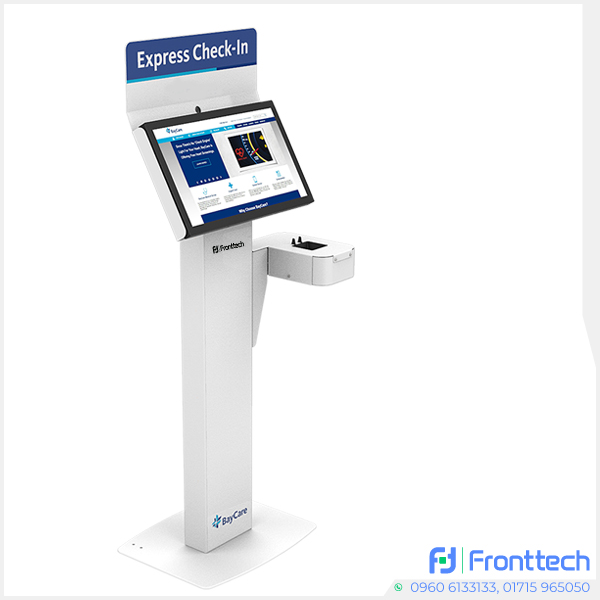
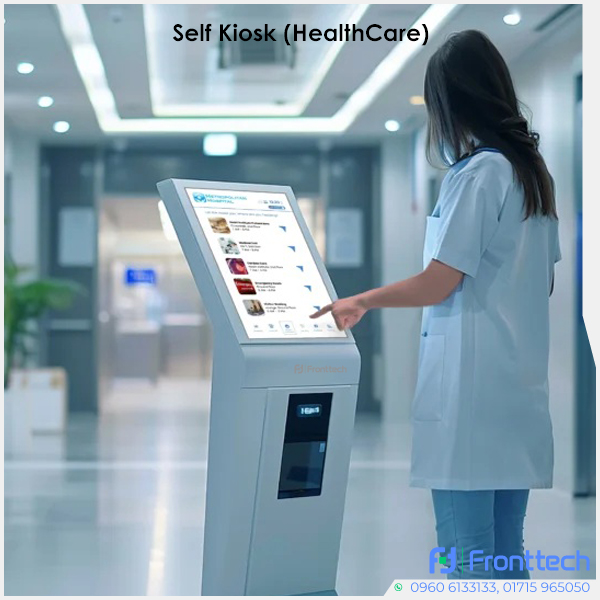
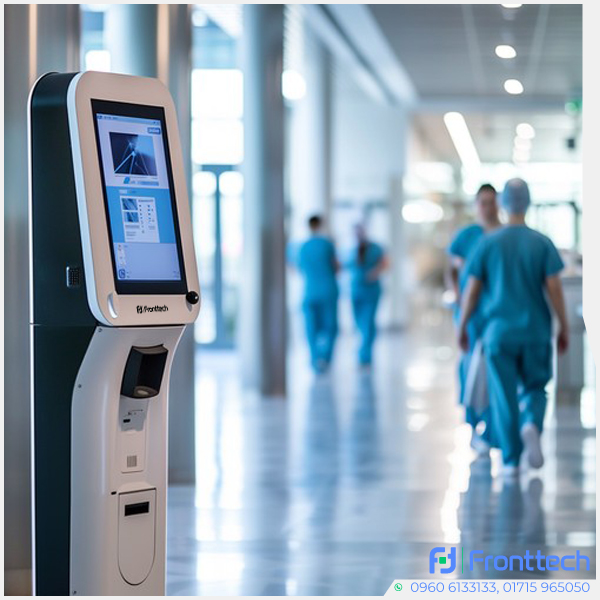
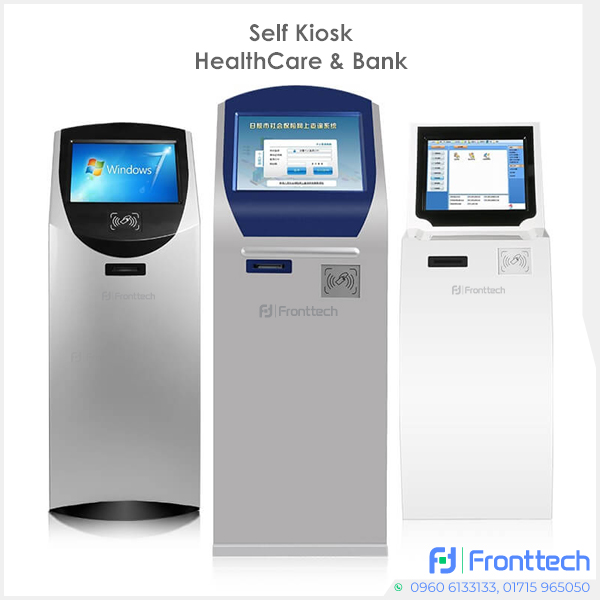
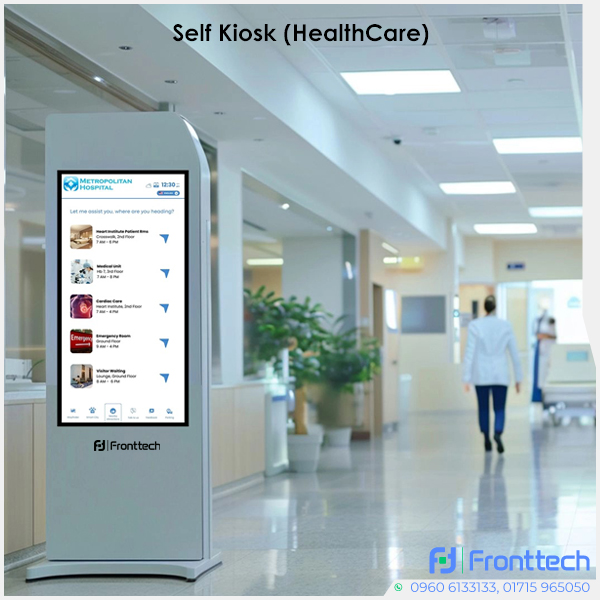
A health kiosk is a self-service digital terminal designed to assist patients with basic health checkups and administrative tasks without direct staff involvement. The FrontTech Health Kiosk allows users to measure vital signs, register themselves, and access healthcare services through an easy-to-use touchscreen interface.
The main purpose of the FrontTech health kiosk is to support automation in hospitals and clinics by reducing manual processes. It helps healthcare facilities manage patient flow more efficiently, minimize waiting time, and optimize staff workload by enabling patients to complete routine tasks independently.
As a patient self-service and digital healthcare solution, the FrontTech health kiosk improves accessibility and convenience for both patients and healthcare providers. It supports faster data collection, digital record management, and a smoother overall patient experience in busy medical environments.
A health kiosk helps hospitals and clinics streamline patient services by automating routine tasks such as registration and basic health checks. By allowing patients to complete these steps on their own, facilities can reduce congestion at service counters and improve overall workflow.
The FrontTech Health Kiosk is designed to speed up patient registration and vital sign measurement, ensuring quicker service without compromising accuracy. This leads to a more organized environment where staff can focus on critical care instead of repetitive administrative work.
Reduced patient queues and waiting time
Faster registration and vital sign checks
Improved patient experience through self-service
Lower staff workload and better resource utilization
Interactive self-service health terminal for patient use
Touchscreen-based patient interaction for easy operation
Integrated health monitoring modules for vital checks
Digital patient registration and check-in support
Report printing and data storage capability
Secure and hygienic design suitable for medical environments
Durable body designed for continuous hospital and clinic use
This table presents the core technical specifications of the health kiosk. It helps hospitals and clinics quickly review the hardware, system capabilities, and build quality to evaluate suitability for daily medical use.
| Specification | Details |
|---|---|
| Brand | FrontTech |
| Origin | China |
| Manufacture | OEM Manufacturer |
| Model | Health Kiosk – Self-Service Solution |
| Display Size | 21.5″ / 32″ Touch Display (Configurable) |
| Touch Type | Capacitive Touch |
| Health Modules | BP, Body Temperature, SpO₂, Weight, BMI (Configurable) |
| Camera / Scanner | Integrated Camera & Barcode/QR Scanner |
| Printer | Built-in Thermal Printer (Prescription / Token / Report) |
| Operating System | Windows / Android |
| Connectivity | LAN / Wi-Fi |
| Installation Type | Floor Standing |
| Body Material | Medical-Grade Metal Body |
This table explains the display quality and touch performance of the health kiosk. It helps healthcare providers understand screen clarity, touch responsiveness, and long-term durability for daily patient use.
| Display / Touch Feature | Details |
|---|---|
| Panel Technology | Commercial Grade LED |
| Touch Technology | Capacitive Touch |
| Touch Response Time | ≤ 10 ms |
| Touch Accuracy | High Precision |
| Viewing Angle | 178° (Horizontal / Vertical) |
| Lifetime | Up to 50,000 Hours |
This table outlines the integrated health monitoring modules available in the health kiosk. It helps healthcare providers understand which vital signs can be measured, the level of accuracy, and how patient data is recorded for clinical use.
| Health Module | Details |
|---|---|
| Blood Pressure Monitor | Automated BP measurement module |
| Body Temperature Sensor | Non-contact temperature sensor |
| SpO₂ / Pulse Sensor | Finger-based SpO₂ and pulse rate sensor |
| Weight & BMI Module | Digital weight scale with BMI calculation |
| Accuracy Level | Medical-grade accuracy |
| Data Recording | Digital data storage and reporting support |
This table describes the internal system configuration and performance capabilities of the health kiosk. It helps hospitals and clinics evaluate processing power, software compatibility, and connectivity required for stable and efficient daily operation.
| System Feature | Details |
|---|---|
| CPU | Industrial-grade Processor |
| RAM | 4 GB (Configurable) |
| Storage | 128 GB SSD (Configurable) |
| Operating System | Windows / Android |
| Software Integration | HIS / EMR, Custom Healthcare Applications |
| Network Support | LAN / Wi-Fi |
This table highlights the security and data protection measures built into the health kiosk. It helps hospitals and clinics understand how patient data is secured, access is controlled, and compliance requirements are supported during daily operation.
| Security Feature | Details |
|---|---|
| User Authentication | Secure login with role-based access control |
| Data Encryption | Encrypted storage and transmission of patient data |
| Patient Privacy Compliance | Designed to support healthcare data privacy standards |
| Camera Support | Optional camera support for identification and monitoring |
| Audit Log | System activity and transaction logging support |
This table outlines the electrical requirements and power behavior of the health kiosk. It helps hospitals and clinics plan safe installation, ensure stable operation, and maintain service continuity during daily use.
| Electrical Feature | Details |
|---|---|
| Power Supply | Built-in industrial power supply |
| Power Consumption | ≤ 150 W (configuration dependent) |
| Voltage | AC 100–240V, 50/60 Hz |
| Backup Power Support | UPS compatibility for safe shutdown |
This table explains the environmental operating conditions and medical safety standards supported by the health kiosk. It helps healthcare facilities ensure the kiosk can operate safely and reliably in clinical environments.
| Environment | Details |
|---|---|
| Working Temperature | 0°C – 40°C |
| Storage Temperature | -20°C – 60°C |
| Humidity | 10% – 90% (Non-Condensing) |
| Medical Safety Standards | Designed to comply with healthcare safety requirements |
This table provides an overview of the physical design, size, and build quality of the health kiosk. It helps hospitals and clinics plan placement, transportation, and installation while ensuring durability for daily medical use.
| Physical Info | Details |
|---|---|
| Kiosk Type | Floor Standing |
| Product Size | Approx. 1800 × 650 × 120 mm |
| Package Size | Approx. 1900 × 750 × 250 mm |
| Net Weight | Approx. 110 kg |
| Gross Weight | Approx. 125 kg |
| Body Material | Medical-Grade Metal Body |
Health kiosks are designed to improve patient flow, reduce manual workload, and support digital healthcare services in various medical environments. Below are common use cases where a health kiosk delivers the most value.
In hospitals and large medical centers, health kiosks help automate patient registration and basic health checks, reducing congestion at service counters.
Self-service patient registration and check-in
Quick vitals measurement before consultation
Reduced queue and improved workflow efficiency
For clinics and diagnostic centers, health kiosks support faster patient handling and accurate data collection.
Automated vitals recording and patient data entry
Faster registration for walk-in patients
Supports digital reports and record management
In public healthcare programs and health camps, health kiosks provide easy access to basic health screening services.
Suitable for mass health screening and awareness programs
Easy deployment in temporary or semi-permanent locations
Helps collect and store health data efficiently
This section explains how the health kiosk integrates with hospital and clinic systems to support digital healthcare workflows. It highlights software connectivity that enables seamless data exchange and system coordination.
Supports integration with HIS and EMR systems
Compatible with appointment scheduling and token management systems
Enables patient data reporting and record management
This section outlines the installation and deployment process for the health kiosk. It helps healthcare facilities understand placement requirements, connectivity needs, and support available during rollout.
Floor-standing deployment for stable and secure placement
Standard network and power setup required for operation
On-site installation support available for system setup
This section outlines the warranty coverage and after-sales services provided with the health kiosk. It helps hospitals and clinics understand the level of support available after installation and during long-term use.
The health kiosk comes with standard warranty coverage against manufacturing defects under normal operating conditions. Technical support is available for installation guidance, system configuration, and troubleshooting. Maintenance and service plans are offered to ensure reliable performance, minimal downtime, and long-term operational stability.
This section explains how pricing is determined for the health kiosk. It helps hospitals and institutions choose the right configuration based on their operational needs and budget.
Pricing is based on selected hardware configuration, health monitoring modules, and software requirements. Hospital and institutional quotations are available for bulk or multi-unit deployments. Custom module selection allows facilities to tailor the kiosk according to specific clinical and workflow requirements.
This section answers common questions to help hospitals and clinics understand the capabilities, security, and daily usability of the health kiosk before deployment.
The health kiosk can perform basic health checks such as blood pressure, body temperature, SpO₂, pulse rate, weight, and BMI. Available health modules can be customized based on requirements.
Yes. The health kiosk supports secure user authentication, encrypted data storage and transmission, and privacy-focused system design to protect patient information.
Yes. The kiosk can integrate with hospital systems such as HIS and EMR, allowing patient data, reports, and registrations to sync with existing healthcare platforms.
Yes. The health kiosk is designed for continuous daily operation in hospitals, clinics, and public healthcare facilities with proper power, network, and maintenance support.