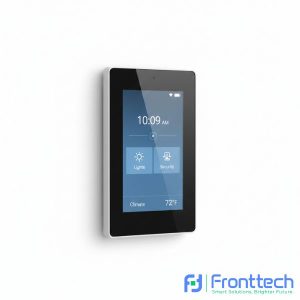
Showing the single result
Smart Office Automation is a modern technology system where different office operations are managed through automated processes and centralized control. Many organizations now use smart technologies to make their workplace more efficient and organized. Using automated lighting systems, smart meeting rooms, access control systems, and centralized office control platforms, the entire office environment can be managed easily.
For example, automated lighting sensors can control lights based on employee presence, while smart meeting room systems can activate displays, presentations, and conferencing systems according to the meeting schedule. Similarly, biometric or RFID-based access control systems strengthen office security and help reduce unauthorized access.
Modern businesses implement automation systems to increase productivity, improve operational efficiency, and optimize energy management. As a result, Smart Office Automation in Bangladesh is rapidly growing in demand. Many organizations are now using advanced Smart Office Automation Solutions to transform their offices into smart, secure, and future-ready workplaces.
Various types of Smart Office Automation systems are used in modern workplaces to make office management more efficient, secure, and comfortable. These automation systems simplify lighting control, security management, meeting room operations, and energy management. Multiple smart technologies work together to create a connected office environment.
Smart lighting automation is an important system in offices where motion sensors and smart controllers automatically turn lights on or off. This reduces unnecessary electricity usage and improves energy efficiency.
Meeting room automation systems help manage meeting room booking, presentation control, and room environment automatically. For example, automated meeting rooms can activate presentation screens, lighting, and video conferencing systems automatically.
Smart access control systems improve office security by using biometric authentication, RFID cards, or mobile access. This allows authorized employees to enter easily while preventing unauthorized access.
In addition, climate automation systems and energy management systems automatically control office temperature, air conditioning, and power consumption. Smart temperature control helps maintain workplace comfort and reduce energy costs.
When selecting an effective Smart Office Automation system, businesses usually look for several important features that make office operations easier, more secure, and more efficient. Modern automation solutions not only control devices but also help manage the entire workplace through a smart digital platform.
One of the most important features is a centralized control dashboard. Through this dashboard, office lighting, meeting rooms, security systems, and climate control can all be managed from a single interface. This allows office administrators to easily monitor the entire workplace environment.
Another important advantage is remote monitoring. With this feature, office managers can check system status from a mobile device or computer at any time. For example, lighting or temperature can be adjusted remotely even when no one is physically present in the office.
Energy efficiency and automated scheduling features make office operations more efficient. For instance, automated lighting systems control lights based on employee presence, while meeting room scheduling systems prepare the room environment automatically according to meeting times.
In addition, security integration such as biometric access control or smart surveillance systems plays an important role in improving office safety. These automation features work together to increase productivity, ensure employee comfort, and improve overall operational efficiency.
Different Smart Office Automation systems are used in modern workplaces to simplify various operations. Some automation systems focus on lighting control and energy efficiency, while others are designed to improve office security or meeting management. Each automation solution has a specific purpose, and businesses select systems based on their office requirements.
For example, some organizations use smart lighting systems to reduce energy consumption, while others install biometric access control systems to improve office security. The comparison table below helps explain different Smart Office Automation systems and their applications.
| Automation Type | Main Function | Best For |
|---|---|---|
| Smart Lighting | Automated lighting control using sensors and scheduling | Energy efficiency |
| Access Control | Entry security using biometric, RFID, or smart card systems | Office security |
| Meeting Room Automation | Conference system, display, and meeting scheduling control | Meeting spaces |
| Climate Control | Automatic temperature and air conditioning management | Employee comfort |
| Energy Management | Monitor and optimize electricity usage across office systems | Cost reduction |
Businesses typically choose automation systems based on office size, security requirements, and operational goals. For example, corporate offices with frequent meetings benefit from meeting room automation systems, while large offices often use energy management systems to reduce electricity costs.
The pricing of Smart Office Automation in Bangladesh is usually not fixed because each office may have different automation requirements. In most cases, automation solutions are customized based on office size, technology needs, and system integration. Therefore, the automation cost for a small office and a large corporate office will not be the same.
One important factor is office size. Larger offices often require more lighting zones, access points, and meeting rooms to be automated, which increases the number of automation devices required. Another factor is the automation system type, such as smart lighting, access control, climate automation, or energy management systems, which can change hardware and software requirements.
Another major consideration is hardware requirements and installation complexity. Smart sensors, controllers, biometric devices, networking equipment, and centralized control systems affect installation costs. If the system needs to be integrated with existing office infrastructure, the implementation can become more complex.
Generally, businesses design automation systems according to their operational goals and office needs so they can improve long-term efficiency, energy management, and workplace productivity.
Choosing the right Smart Office Automation system is an important decision because every office environment and operational requirement is different. Before selecting an automation system, businesses should evaluate their office size and daily workflow. For example, a small office may only need smart lighting and basic access control systems, while a large corporate workspace may require meeting room automation, centralized control systems, and energy management solutions.
Another important factor is automation needs and security requirements. Offices that handle sensitive data or have restricted areas may require biometric access control or smart security integration. It is also important that the automation system maintains integration compatibility with existing office infrastructure.
Businesses should also consider scalability. This means that if the office expands or new automation devices are added in the future, the system should be easy to upgrade. To ensure a flexible and scalable setup, many organizations implement Smart Office Automation Solutions so their office technology remains future-ready and operational efficiency can be maintained in the long term.
Many businesses have questions before implementing Smart Office Automation systems. The FAQ section below explains what Smart Office Automation is, how it works, and the benefits it offers in modern workplaces.
Smart office automation is a technology system where office devices and systems are controlled through automation. For example, smart lighting, access control, meeting room management, and climate control systems can operate automatically, making workplace management easier.
Smart office automation usually works using sensors, smart controllers, and centralized software platforms. These systems connect with different office devices and automatically manage lighting, security, meeting rooms, and temperature through automated rules or remote control.
Smart office automation helps increase productivity and reduces manual work. Automated lighting lowers energy costs, access control improves security, and smart meeting room systems make office operations more organized. As a result, employees experience a more comfortable and efficient workplace environment.
Yes, modern smart office automation systems generally use advanced security features such as biometric authentication, smart access control, and surveillance integration. These systems help prevent unauthorized access and make office security monitoring easier and more effective.
Yes, smart office automation is not only for large corporate offices. Small offices can also use basic automation setups such as smart lighting, simple access control, or temperature automation systems. This improves operational efficiency and makes energy management easier.