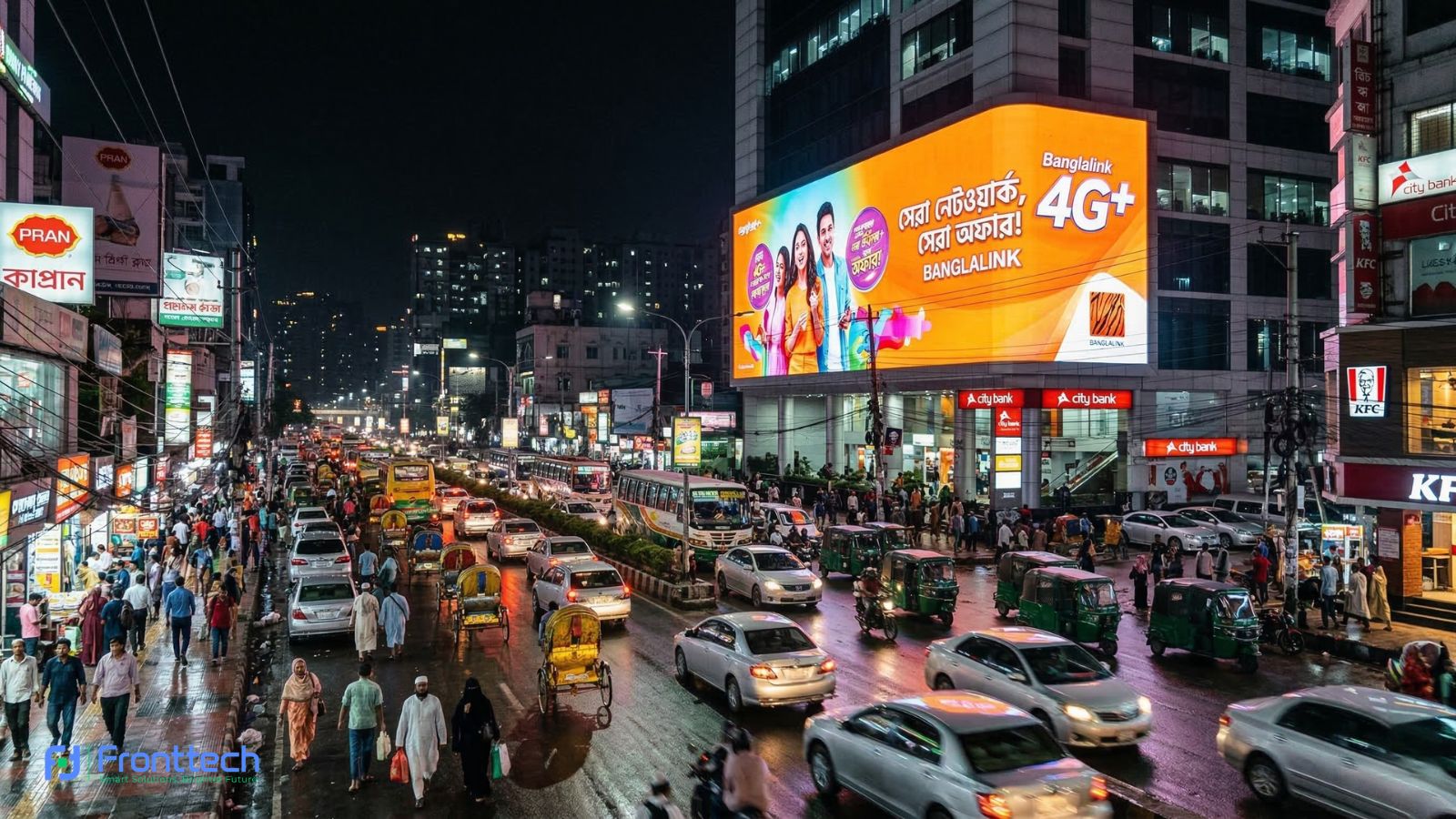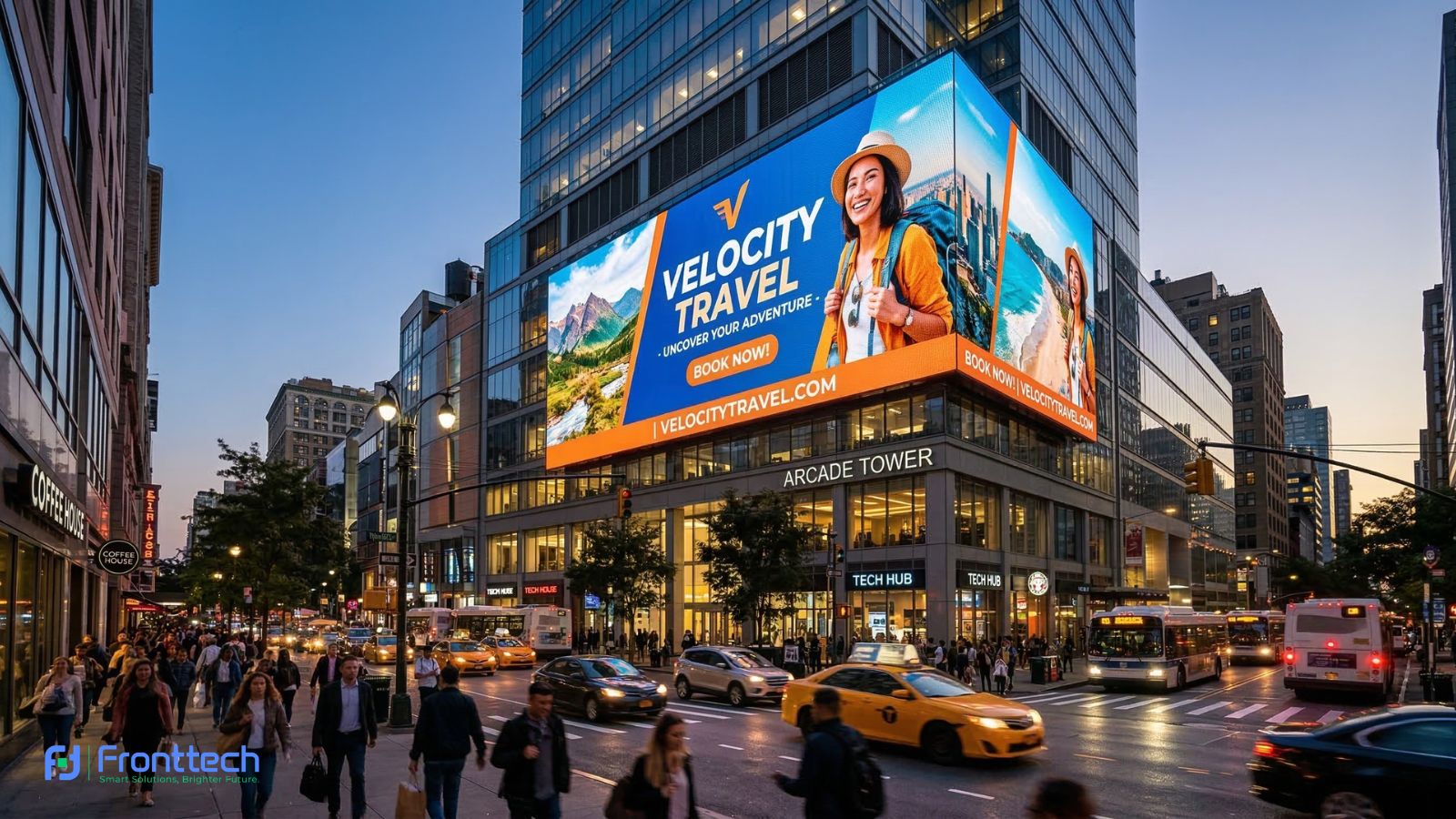

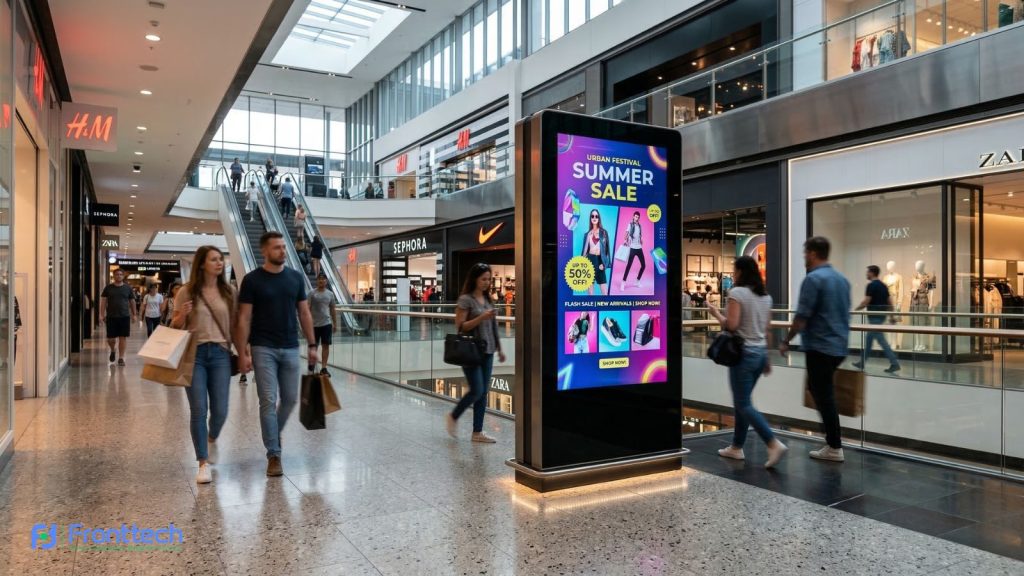
In the rapidly evolving landscape of Bangladesh’s business sector, the way we communicate with our audience has fundamentally shifted. Gone are the days when a static PVC banner or a printed poster was enough to catch a customer’s eye. We are now firmly in the New Era of Smart Display Solutions.
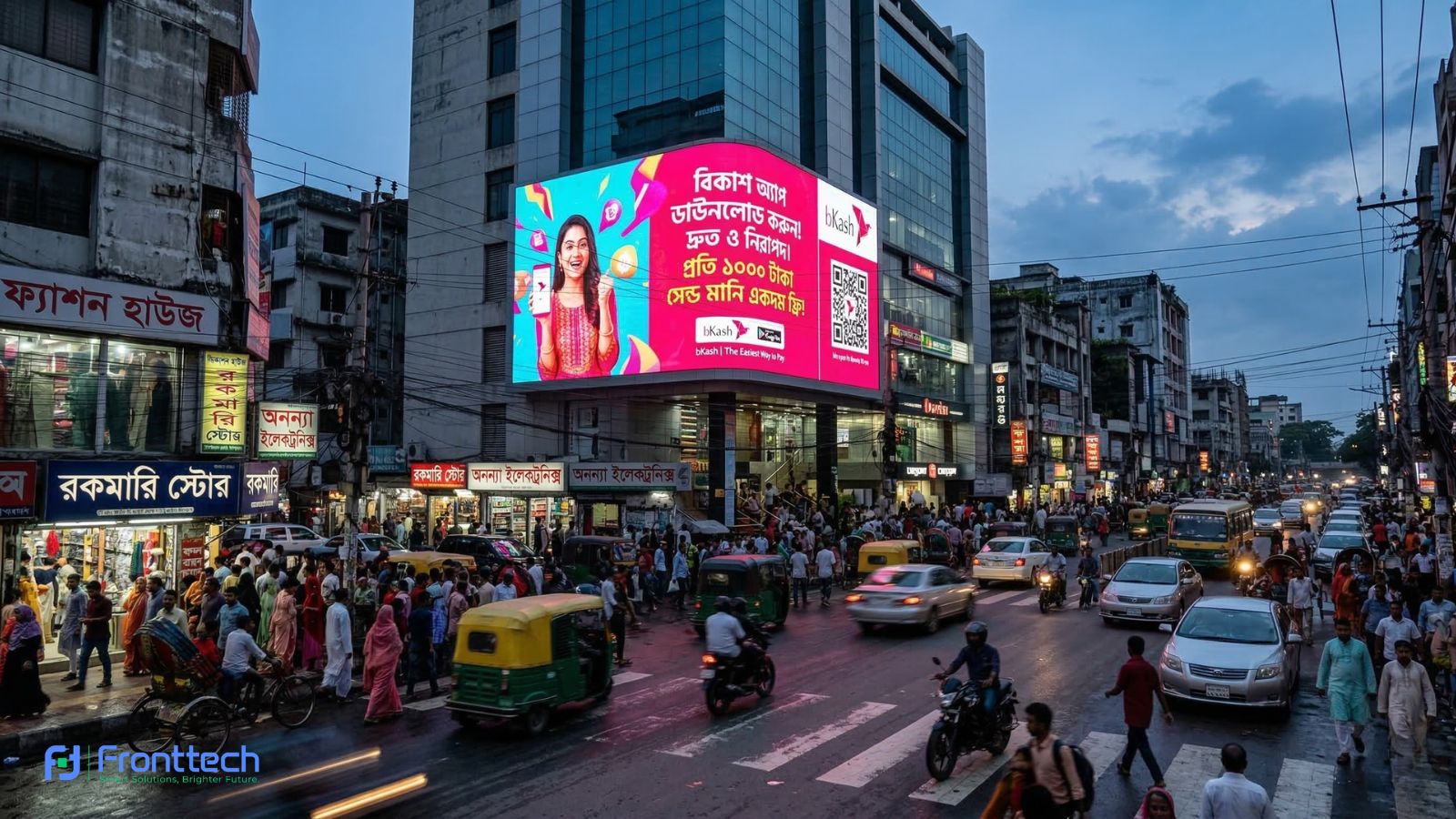
From the high-traffic shopping malls of Dhaka to the busy bank branches in Chattogram, Digital Signage Display Kiosks are becoming the heartbeat of modern branding. At FrontTech360, we specialize in providing cutting-edge display technology that doesn’t just show a picture—it tells a story, provides a service, and runs your marketing department automatically.
In this comprehensive 1300-word guide, we will explore why digital signage is a “must-have” for 2026, the power of automated scheduling, and how these smart kiosks can provide a 24/7 boost to your ROI.
What is a Digital Signage Display Kiosk?
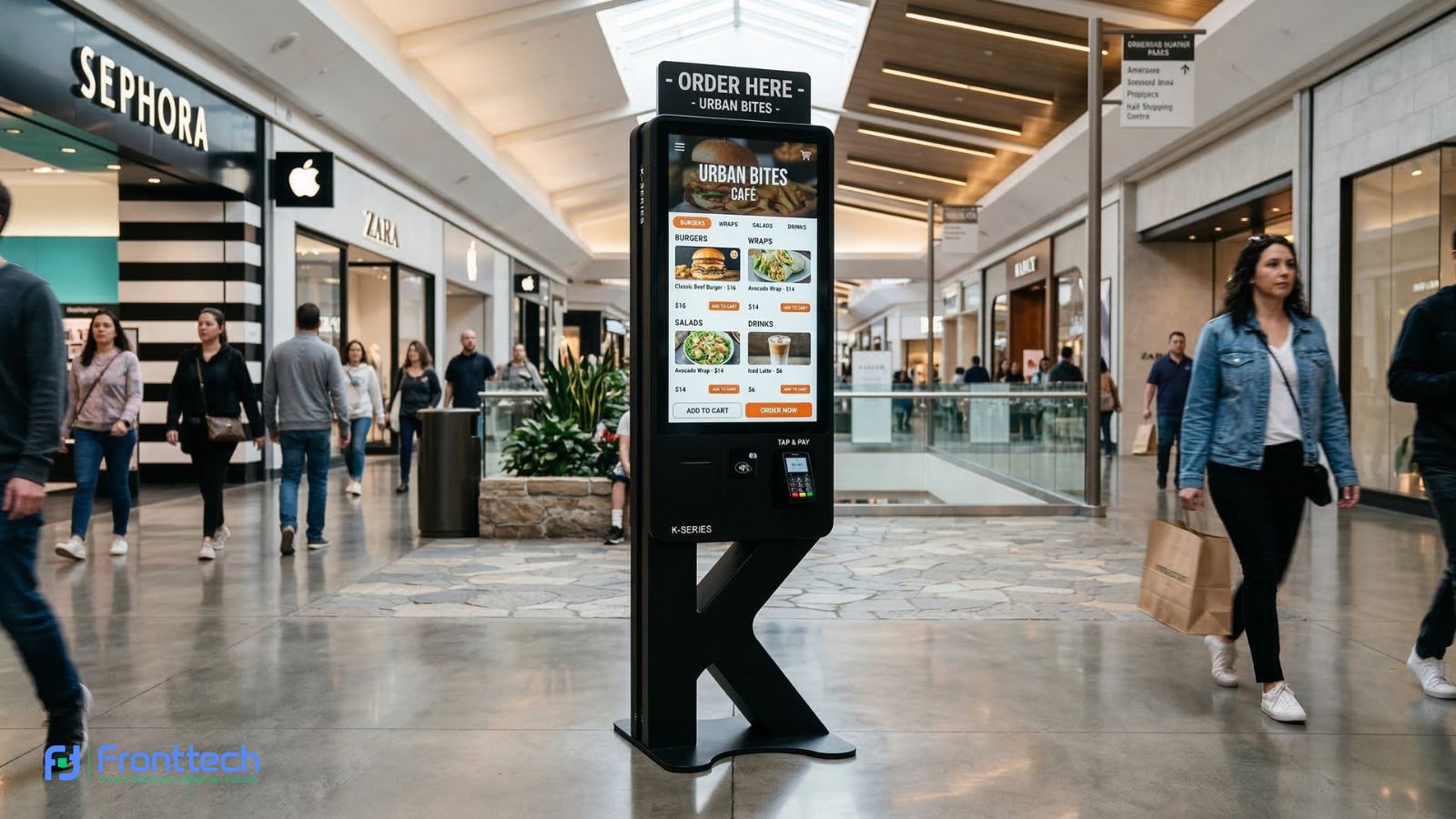
A Digital Signage Display Kiosk is a professional-grade electronic screen—either floor-standing (totem style) or wall-mounted—housed in a durable, sleek enclosure. Unlike a standard home television, these units are engineered for commercial-grade performance.
They utilize high-brightness LCD or LED panels and are powered by internal media players (Android or Windows) that allow you to play videos, image slideshows, live web feeds, and interactive menus. The real “smart” part of these solutions lies in the Content Management System (CMS), which allows business owners to change what the screen shows from a remote location via the internet.
The Game-Changing Features of Modern Kiosks
When you invest in a smart display from FrontTech360, you aren’t just buying a screen; you are buying an automated marketing engine. Here are the core features that define this new era:
1. Auto Play Time Switching System
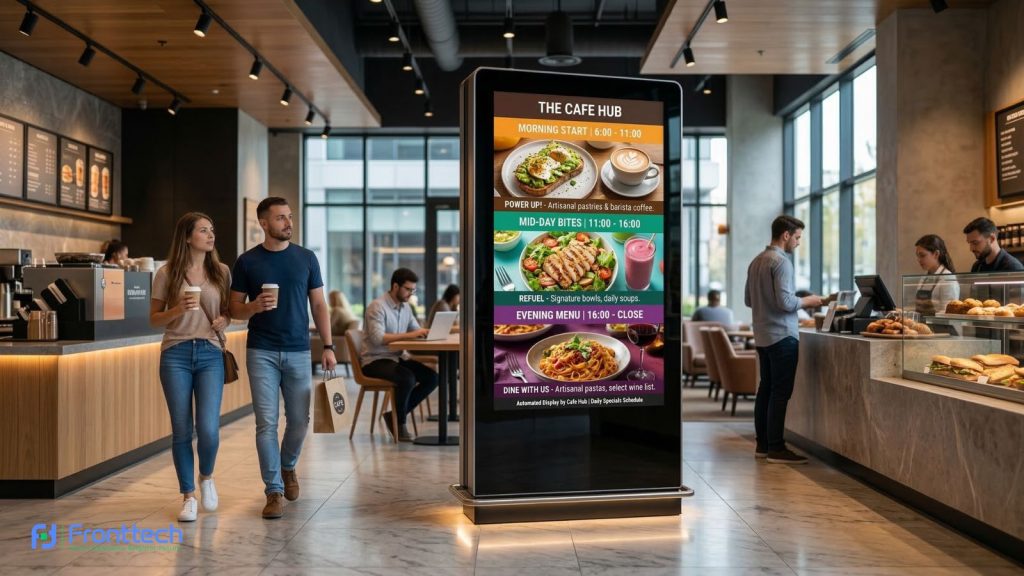
Imagine having a staff member who manually changes your posters every three hours to match the mood of your customers. That is exactly what the Auto Play Time Switching System does.
With this technology, you can pre-schedule your content for the entire week. For example:
- 7:00 AM – 11:00 AM: A cafe can display breakfast deals and hot coffee promos.
- 11:01 AM – 4:00 PM: The screen automatically switches to lunch combos and refreshing cold drinks.
- 4:01 PM – 10:00 PM: The kiosk transitions to dinner specials or “happy hour” advertisements.
This automation ensures your message is always relevant to the person standing in front of the screen at that exact moment.
2. 24/7 Continuous Video Playback
Standard consumer TVs are designed to run for maybe 6 to 8 hours a day. If you run them 24/7, the panel will eventually “burn in” or overheat. Commercial Digital Signage Kiosks are built with industrial-grade cooling systems and heavy-duty power boards. They are rated for 50,000 to 70,000 hours of continuous play. Whether it’s an airport terminal or a hospital emergency room, these screens stay vibrant and functional around the clock.
3. Ultra-High-Definition (4K UHD) Clarity
In the era of smartphones, customers expect high resolution. Modern kiosks offer 4K UHD resolution, providing four times the detail of standard Full HD. This is crucial for retail and jewelry brands where the fine details of a product need to “pop” and look appetizing or luxurious.
4. Remote Cloud Management
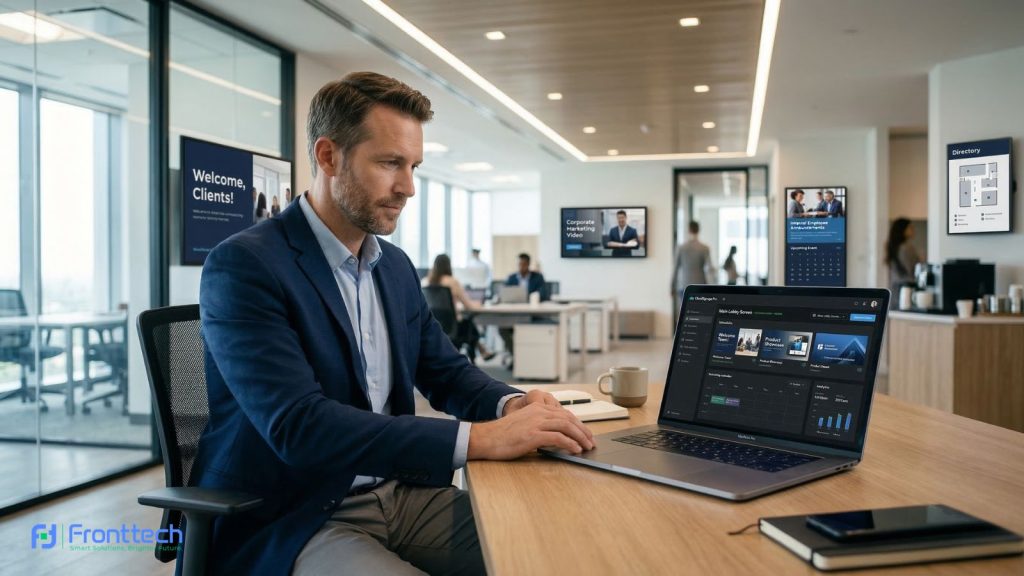
In the past, you had to go to the kiosk with a USB drive to change a video. Now, with Cloud-based CMS, you can be sitting in your office in Gulshan and update the content on 50 different kiosks located across the country with a single click.
Why Your Business Needs a Smart Display (The Benefits)
Investing in digital signage is a strategic move that offers several high-value returns:
A. Dynamic Engagement
Static signs are easy to ignore. The human eye is naturally drawn to motion. A high-quality video or a moving animation on a digital signage kiosk is proven to capture 400% more views than a traditional printed sign.
B. Drastic Reduction in Printing Costs
How much does your business spend every year on printing banners, posters, and menus? Every time a price changes or a new promotion starts, you have to pay for printing and labor. With a smart display, your “printing cost” becomes zero. You simply upload a new file, and your “poster” is updated instantly.
C. Enhanced Customer Experience
In a waiting room or a bank, “perceived wait time” is a major issue. When customers have an engaging screen to look at—showing news, weather, or interesting product videos—they feel like the wait is much shorter. This leads to higher customer satisfaction scores.
D. Upselling and Cross-Selling
A kiosk is the perfect “silent salesperson.” In a retail environment, while a customer is looking at shoes, a nearby kiosk can show a video of the matching handbag. This subtle nudge often leads to an increased average basket value.
Applications Across Different Industries
The beauty of smart display solutions is their versatility. Here is how different sectors in Bangladesh are utilizing them:
1. The Retail Revolution
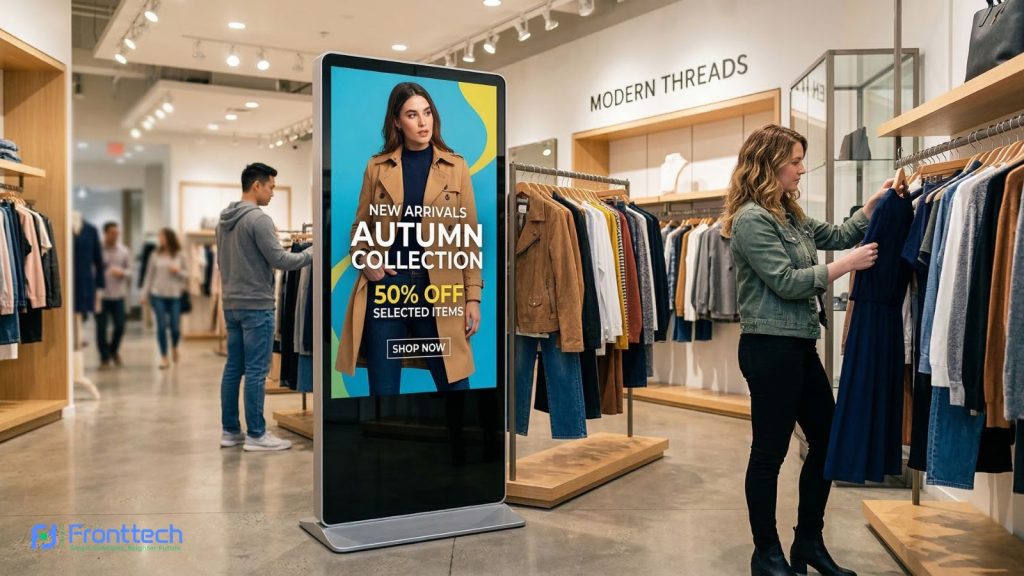
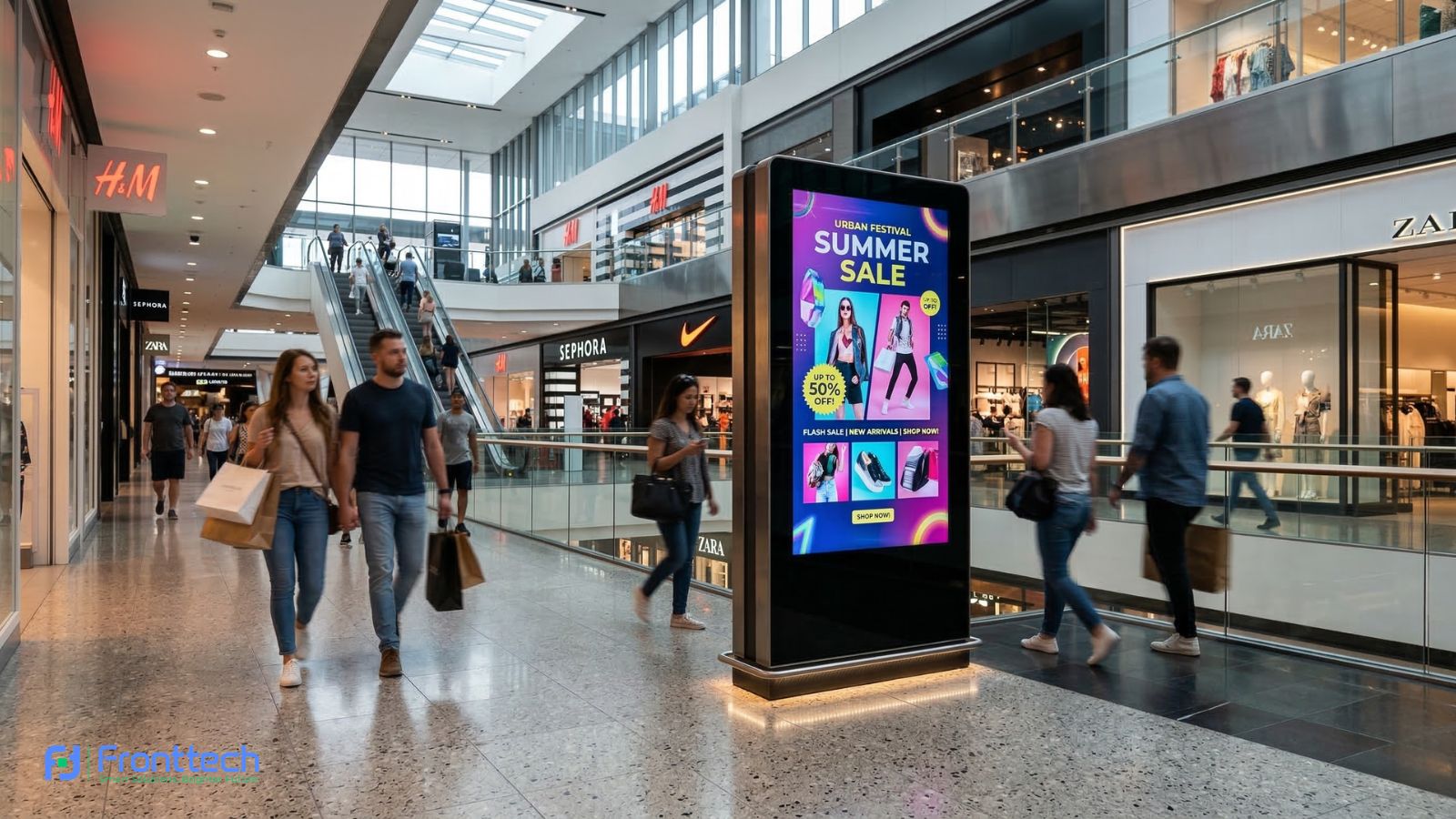
Retailers use kiosks at the entrance of their stores to announce “Flash Sales.” Inside the store, interactive touch kiosks can act as an “Endless Aisle,” allowing customers to browse items that might not be currently in stock and order them for home delivery.
2. Smart Restaurants & QSRs
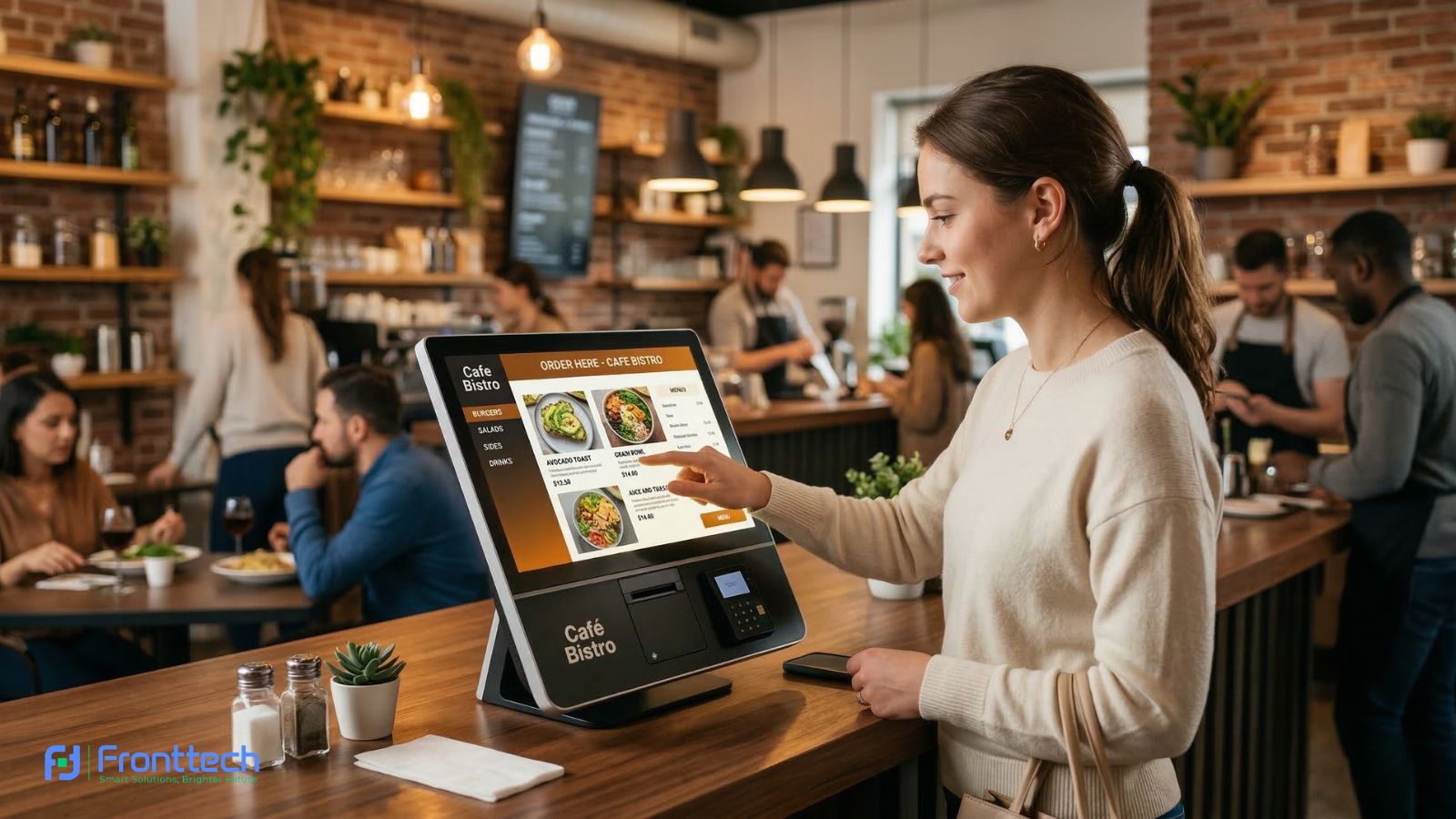
Digital Menu Boards are the standard now. They look cleaner, are easier to read, and allow for “Dayparting” (changing the menu based on the time of day). Some restaurants even use touch-enabled kiosks to let customers place their own orders, reducing the pressure on the counter staff.
3. Healthcare & Hospitals
Wayfinding is a huge challenge in large hospitals. A digital kiosk at the reception can provide a map, show which doctors are currently on duty, and display important health awareness videos to patients in the waiting lounge.
4. Corporate Offices
Modern corporate lobbies use digital signage to welcome important guests by name, display company achievements, and show real-time stock market or weather updates to employees.
5. Banking & Finance
Banks use these screens to show current exchange rates, gold prices, and information about new loan or credit card products. Because these rates change daily, digital signage is the only practical way to keep the information accurate.
The ROI (Return on Investment) of Digital Signage
Is a digital kiosk expensive? When you look at the Total Cost of Ownership (TCO), the answer is no.
- Year 1: You pay for the hardware and installation. You immediately stop paying for most of your monthly printing and distribution costs.
- Year 2-5: Your only cost is the electricity (which is minimal thanks to LED technology) and perhaps a small software subscription.
- The Result: Most businesses see a complete “Break Even” on their investment within 12 to 18 months just from the savings in printing costs alone. The extra revenue from increased sales is pure profit.
How to Choose the Right Kiosk for Your Business
Not all kiosks are created equal. When browsing for the Best Digital Signage in Bangladesh, keep these factors in mind:
- Location Environment: If the kiosk is going to be in a bright sunlight-facing window, you need a High-Brightness (2500+ nits). For standard indoor use, 350-500 nits is sufficient.
- Touch vs. Non-Touch: If you want customers to “browse” or “input data,” you need an Infrared (IR) or Capacitive Touch If you just want to show ads, a non-touch screen is more cost-effective.
- OS Preference: Android is generally cheaper and easier for simple signage apps. Windows OPS modules are better if you need to run complex database software or proprietary corporate applications.
- Size Matters: 43-inch and 55-inch models are the most popular “sweet spots” for kiosks. However, for large open spaces like hotel lobbies, a 65-inch or 75-inch model makes a much stronger statement.
The Future: AI and IoT Integration
We are moving toward a world where the kiosk “knows” who is standing in front of it. With integrated AI cameras, modern kiosks can detect the age and gender of a viewer and instantly switch the content.
For example:
- If a young person stands in front of the screen, it shows trendy fashion or gaming ads.
- If an older person approaches, it might switch to displaying health insurance or luxury travel packages.
This level of hyper-personalization is the next frontier of smart display solutions, and it is something FrontTech360 is excited to bring to the Bangladesh market.
Conclusion: Future-Proof Your Brand Today
The New Era of Smart Display Solutions is here, and it is redefining how businesses interact with the public. A Digital Signage Display Kiosk equipped with an Auto Play Time Switching System and 24/7 continuous play is no longer a luxury—it is a vital tool for any brand that wants to stay competitive, save money on traditional advertising, and provide a modern customer experience.
At FrontTech360, we are committed to helping you navigate this transition. From site survey and hardware selection to software training and maintenance, we are your partners in digital transformation.
Frequently Asked Questions About Digital Signage Display Kiosks
Digital signage display kiosks are becoming essential tools for modern business communication. Many organizations have questions about installation, content management, and long-term benefits before investing in this technology. Below are some common questions and answers to help you understand how smart display solutions work.
What is a digital signage display kiosk?
A digital signage display kiosk is a commercial-grade electronic display used to show videos, images, and advertisements in public spaces. These kiosks are designed for continuous operation and are commonly used in shopping malls, banks, restaurants, and corporate offices.
How does the Auto Play Time Switching System work?
The Auto Play Time Switching System allows businesses to schedule different content for different times of the day. For example, a café can show breakfast promotions in the morning and dinner deals in the evening automatically.
How long does it take to install a kiosk?
Typically, once the hardware is on-site, a standard floor-standing kiosk can be set up and running in under 2 hours.
Can I use the kiosk to show live TV?
Yes. Most of our kiosks have HDMI-input options, allowing you to connect a set-top box to show live news or sports alongside your advertisements.
What happens if the power goes out?
Our kiosks feature an Auto-Restart function. As soon as the power returns, the kiosk will automatically boot up and start playing your scheduled content exactly where it left off.
Do I need a special graphic designer for the content?
While professional videos look best, many of our CMS platforms include easy-to-use templates (similar to Canva) that allow you to create beautiful signage even if you aren’t a designer.
Is the screen protected against vandals?
Yes. Most commercial kiosks come with 4mm to 6mm Tempered Glass that is scratch-resistant and can withstand minor impacts in public spaces.
Can digital signage kiosks run content 24/7?
Yes. Commercial digital signage kiosks are designed for continuous operation. They use industrial-grade components and cooling systems that allow the screens to run video advertisements 24 hours a day without overheating.